Our address:
Helpline and support
The items you place in your storage unit are your responsibility. MoreSpace Solutions rents space and does not assume care, custody, or control of your property — and items are not insured by us.
Before you store, check with your insurance agent to find out whether your homeowner's or renter's policy covers items kept in a storage facility. If not, we can help connect you with storage insurance options. Don't leave your valuables unprotected.
Disassemble furniture when possible and wrap legs and delicate parts individually. Label each piece so reassembly is easy. Store the largest items toward the back of your unit and work forward with smaller items.
Wrap breakable items such as dishes and glassware individually in newspaper or packing paper, then surround them with an additional layer of packing material inside the box. Clearly mark these boxes as "FRAGILE."
Pack books and papers in small, sturdy boxes that can be lifted easily. Avoid overfilling — smaller boxes are easier to stack and less likely to collapse.
Use protective covers or original packaging for computers, televisions, and other electronic equipment. Climate controlled storage is strongly recommended for electronics.
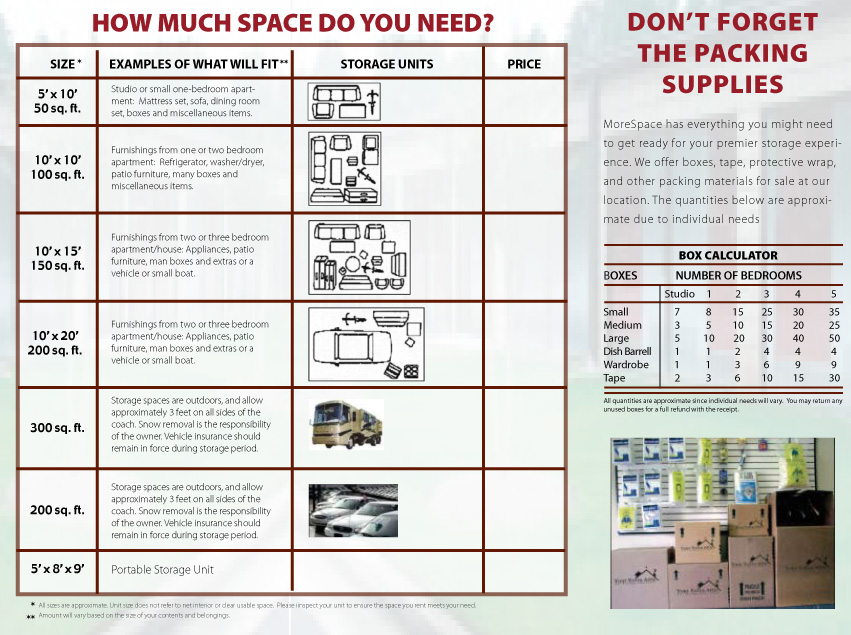
One of the most common questions we get is "How much space do I need?" The answer depends on what you're storing and for how long. Our team is happy to help you estimate the right size — just give us a call or stop by.
5 × 10 (50 sq ft) — $95/month
About the size of a large walk-in closet. Great for:
10 × 10 (100 sq ft) — $120/month
About the size of a standard bedroom. Great for:
10 × 15 (150 sq ft) — $150/month
About the size of a large bedroom or small garage. Great for:
10 × 20 (200 sq ft) — $185/month
About the size of a one-car garage. Great for:
All climate controlled units feature 14-foot ceiling height, allowing you to stack items vertically and make the most of your space.
5 × 8 × 8 Mobile Container
Our mobile containers measure 5 feet wide, 8 feet long, and 8 feet tall. Ideal for:
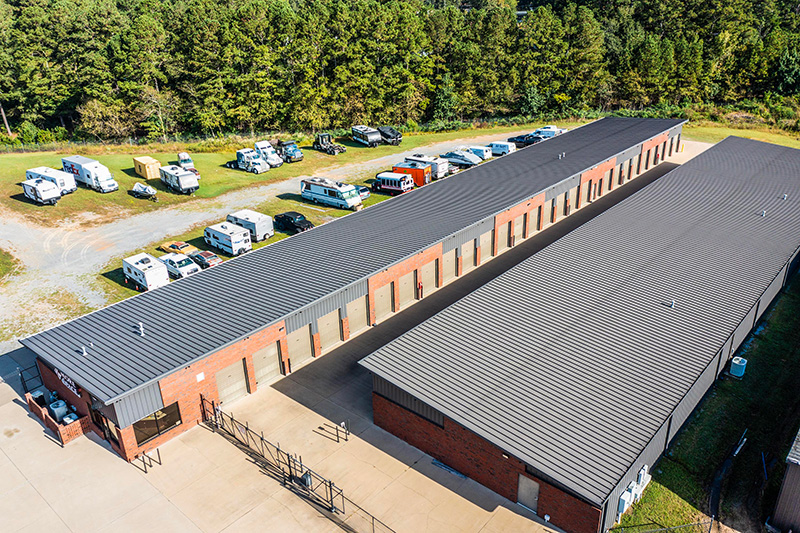
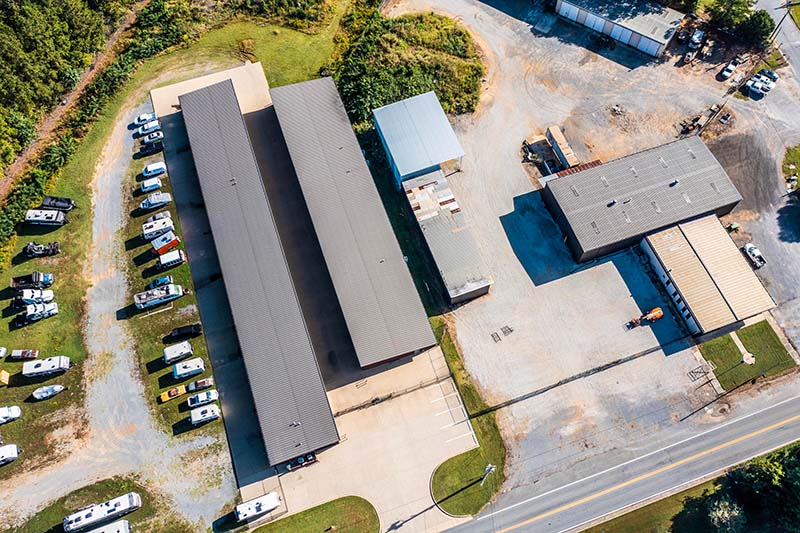
10 × 25 Parking Spaces
Each space measures 10 feet wide by 25 feet long. Accommodates:
Covered parking: $90/month. Uncovered parking: $65/month.
Office sizes vary. Available as individual private offices or a full suite of approximately 3,700 sq ft. Contact us to discuss your specific needs.
Units range from 25×50 up to 65×50 (1,250 to 3,250 sq ft). All shop and warehouse units feature 17-foot ceiling heights — ideal for equipment, lifts, racking systems, or tall inventory.
Good packing materials make a real difference. Box strength degrades with use, so always use sturdy, new boxes when possible. Boxes of similar sizes are easier to stack securely and help you make the most of your vertical space.
Packing materials including boxes are available for purchase on site. Using uniform, high-quality materials will save you time, protect your belongings, and make your unit far easier to navigate.
Our team is always happy to help you plan your storage and make sure your belongings are protected. Give us a call, send us an email, or stop by.